
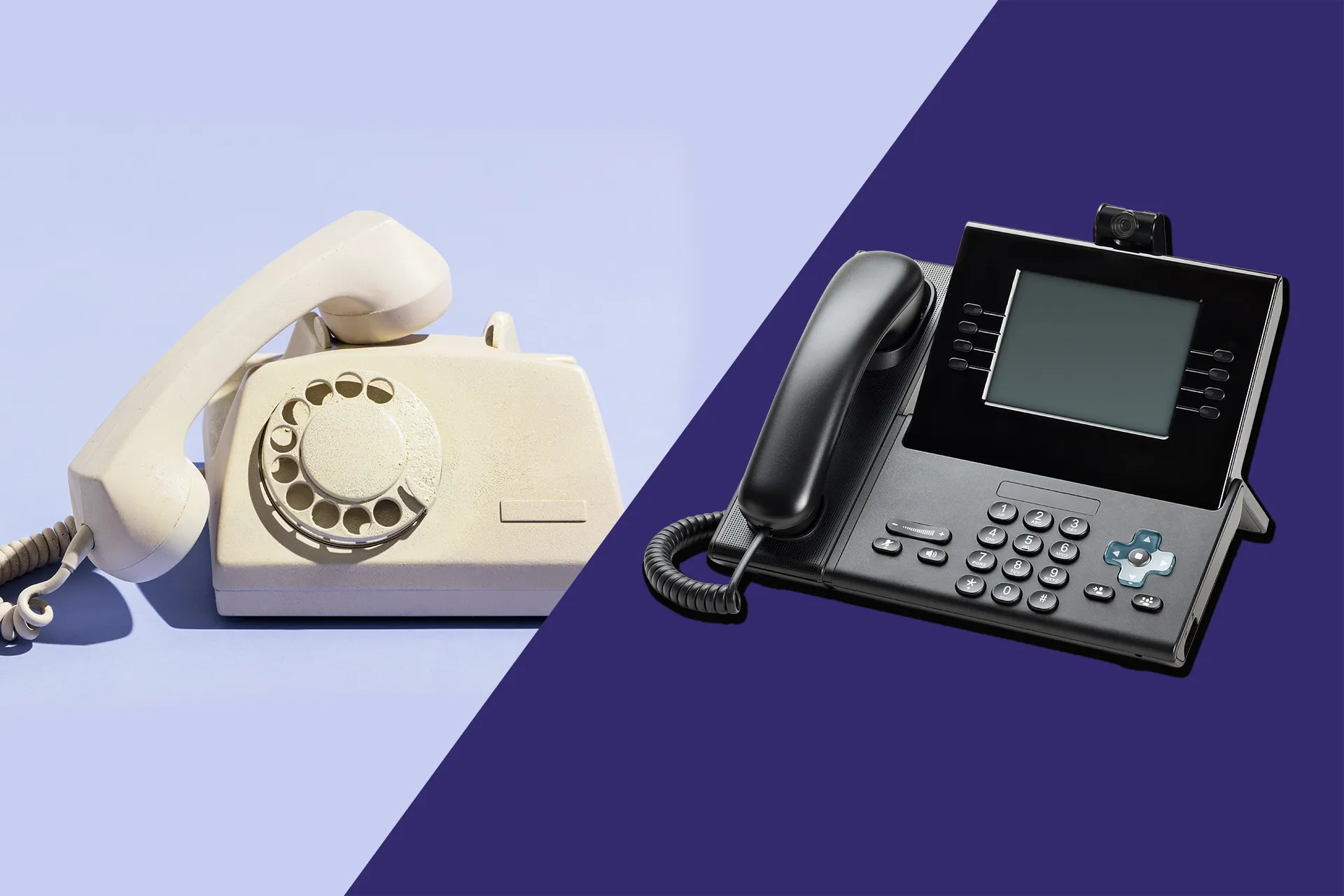
There’s a point where a phone system stops being “fine” and starts getting in the way. Missed calls. Rising costs. A team that can’t work flexibly. Or simply the realisation that the system they’re using no longer fits how they operate.
That’s usually when the question comes up. Do we stick with what we have, or move to VoIP?
Why traditional phone lines are on the way out
For years, traditional phone lines were the standard. They were reliable, familiar, and for a long time, they did the job. But things have changed. The UK is now phasing out PSTN and ISDN networks. That means traditional phone lines are being switched off, and every business still using them will need to move to a digital alternative.
That alternative is VoIP. So the difference isn’t just technical anymore. It’s about old infrastructure versus what’s replacing it.
How traditional phone systems work against you
Traditional phone systems rely on physical lines installed into your premises. Your setup is tied to that location. If your team grows, you add more lines. If you want flexibility, it’s limited. If something goes wrong, you’re often relying on engineers and maintenance.
We see this a lot with businesses that have grown over time but are still using the same system they started with. It works, but only just.
What VoIP does differently
VoIP removes those restrictions. Because it runs over the internet, your phone system is no longer fixed to one place. Calls can be answered from a desk phone, a mobile, or a laptop. Your team can be in different locations without it affecting how calls are handled. It gives you a setup that matches how businesses actually operate now.
The cost difference
Cost is usually one of the first noticeable differences. Traditional systems come with line rental, ongoing maintenance, and often higher call charges. VoIP uses your existing internet connection, which typically makes it far more cost-efficient, especially as your business scales.
A step up in functionality
The bigger shift is in functionality. Traditional phone systems are limited in what they can do. VoIP systems are built with modern business in mind: call routing, auto-attendants, voicemail to email, call recording, and analytics. Features that make your business feel more organised without adding complexity.
It’s not just about making calls anymore. It’s about how those calls are handled.

Is VoIP as reliable as a traditional line?
A common hesitation is whether VoIP is as reliable as a traditional line. In practice, with the right setup, it is. In many cases, call quality is clearer, and because the system isn’t tied to one physical line, you have more flexibility if something goes wrong.
For example, if your office loses power, calls can still be routed to mobiles or other locations. With a traditional system, everything simply stops.
The switch is already happening
The key thing to understand is that this shift is already underway. Staying on a traditional phone line isn’t just sticking with what you know. It’s delaying a move that will need to happen anyway. The difference is whether you make that change in a controlled way, or whether it’s forced later under time pressure.
Why VoIP is now the practical choice
For most small to mid-sized businesses, VoIP is no longer the “new” option. It’s the practical one. It gives you more flexibility, better functionality, and a system that grows with your business instead of holding it back.
How Alternative Comms can help
At Alternative Comms, we help businesses make that transition in a way that feels straightforward. We look at what you’re currently using, where the friction is, and put a system in place that actually works for how your business runs.
If you’re weighing up whether to stay put or switch, we’ll give you a clear answer based on your setup. No jargon, no pressure, just a proper view of what makes sense.